They want your face. It will be called safety. Verification. Age assurance. A small step to protect children. But strip the language away and the demand is plain: before you may speak, post, or read, you must first prove who you are. And the only way they've figured out how to do it is with your government ID, or with your face held up to a camera that decides whether you are old enough to be trusted. This is the deal now being written into law on three continents, and you are meant to accept it quietly. Don't.
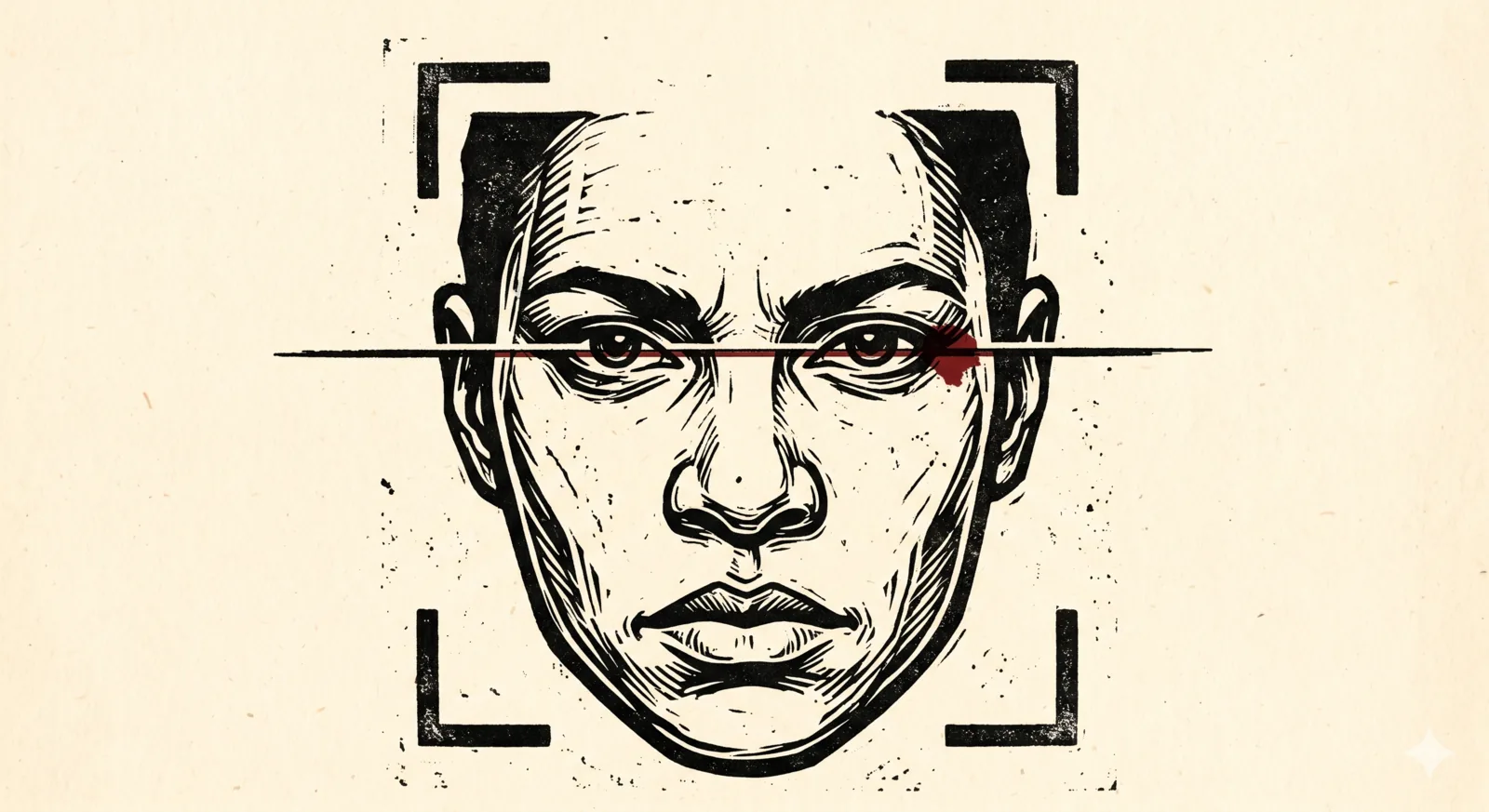
It's always "won't someone think of the children?!". But this affects everyone.
No one disputes that the internet can hurt kids. That grief is real, but it's being exploited. Here is the trick: to confirm that a child is not present, a service has to check everybody. Every adult passes through the checkpoint. A law written about sixteen-year-olds quietly becomes an identity requirement for the entire internet. You are not carded because you are suspected of anything. You are carded because carding has become the price of admission to life on the web.
We run background checks on people who want to buy a gun, but we do not background check everyone at all times just in case. Yet that is exactly the design here. It's a permit check at the door of every conversation, applied to all, justified by the few.
It is not age verification. It is identity verification.
Watch the words drift. This whole system was sold as age assurance, which is a yes-or-no question, are you over eighteen? But almost none of these systems are built to answer only that. They are built to know who you are: your name, your date of birth, your document number, your face. This is not age verification at all. It is forced identity tracking. Your real-world identity captured by not only Meta, Facebook, Twitter, Instagram, etc, but shared broadly with every creepy agency you already worry about "having all your data".
Name the places now demanding "age verification," and see how many will accept a plain government document that says only that you are over eighteen — and nothing else. Almost none will. Because age was never the point.
We spent a generation teaching people the first rule of the internet: never give out your real identity to strangers. We have a word, doxxing, for inflicting that exposure on someone against their will. And now the same governments and platforms are asking every citizen to do it to themselves, voluntarily, as a condition of logging in.
You can change a password. You cannot change your face.
A leaked password is an inconvenience. You reset it and move on. Your face, your driver's license, the unique geometry a scanner reduces to a number cannot be reset. A face scan is not a photograph. It is a three-dimensional map of you, a biometric template precise enough to be matched later against a surveillance camera on a street corner. When you hand over and it lives on someone else's server, often a third-party vendor you never chose, cannot name, and cannot hold to account.
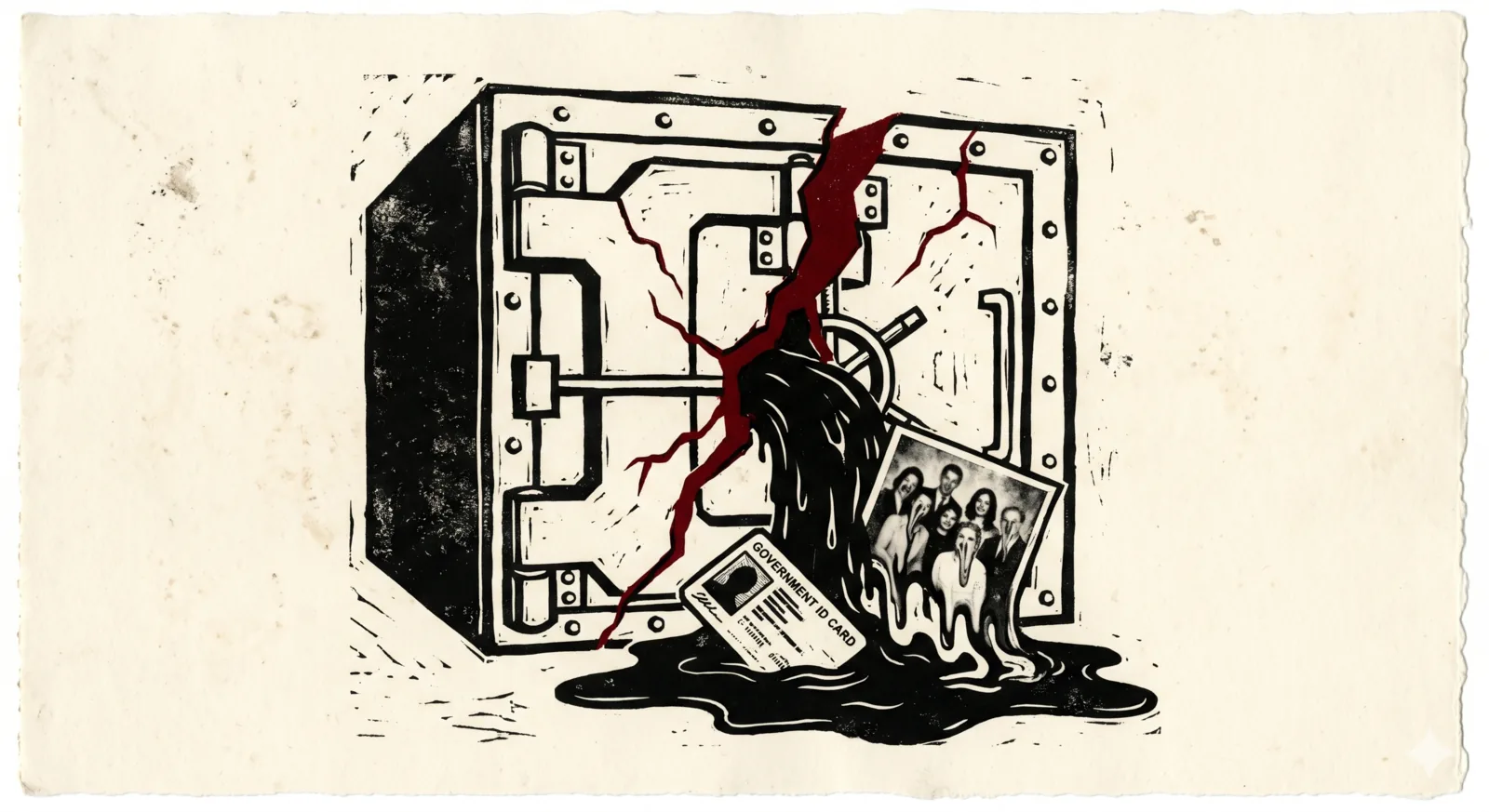
Every one of those databases is a honeypot. The verifier promises your documents are deleted the moment they are checked. They are not always deleted, and the promise is worthless the day the company is breached. Remember the last twenty years of worthles $17.99 Equifax IDentityGuard+ credits from all those data breaches? It has happened, it will happen again, except this time it's not your email, hashed password, or even your SSN. It's your face and passport that's for sale on the dark web.
It does not work — and it makes the danger worse.
Here is the insult beneath the injury: it fails at the one thing it promises. Determined teenagers route around age gates like breathing — a borrowed login, a VPN, a checkbox, a verified account bought for the price of a coffee. Within hours of one platform rolling out age brackets, pre-verified accounts for every age were for sale on eBay. Teenagers machete their way through technologies designed to "protect" or limit them in the same way that water finds the cracks in the wall. They have all the time in the world, all of the incentives, and all of the social structure and obfuscated chat channels to do it.
Worse, the architecture built to "protect" children can endanger them. Sort users into age-labeled pens and you have not only failed to stop a predator, you have created a children index, a phonebook, a way to filter directly for children. Teenagers pushed off mainstream platforms do not stop going online (see point about water above). They move to smaller, darker, unmoderated corners, away from the very oversight that was supposed to keep them safe. The children are not saved. The surveillance is the only thing that survives intact.
Safe now, ??? later
The database you are helping build for a trustworthy government does not stay in trustworthy hands. Administrations change. A registry that merely catalogs who you are today becomes, under a future government, a map of who to find. We already know that US federal agencies spy on citizens wholesale: who attended which protest, who read which forum, who belongs to which group. People are right to be afraid of what a hostile regime would do with a ready-made list. The data does not forget, and it does not take sides. It simply waits for whoever holds it next.
The whole internet starts to feel like the office: everyone too frightened to say anything but the safe thing, lest a real name attached to a real opinion cost them a real job.
A principled stance
Most people are fine with this, based on the same debunked "nothing to hide" fallacies that are always trotted out in these conversations. Surveys find overwhelming majorities want children protected online, and large majorities say they support age verification in the abstract.
This is not a popularity contest, and refusal is not a vote you are trying to win. A verification regime does not need your approval — it needs your participation. It only works if nearly everyone complies. The point of refusal is not to persuade a majority before acting; it is to deny the system the universal cooperation it requires to function at all. You do not need to win the poll. Just don't upload the photo. Never give them your face.
If Starbucks asked to scan your ID and put it in a national database to sell you a latte, would you give it to them? No, because you value your identity more than your latte. Do you not value your identity more than your ability to see some random cousin post about their repugnant political opinions or a picture of someone's dog?
I am but one
In theory, us normal internet users can stop this whole system by opt-ing out, by boycotting the process. Imagine a "National Month of Identity Choice", where no one used any platform demanding your face, no one logged on, no one saw any ads, no one bought any sponsored projects. The platforms would see massive revenue drops, and there would be intense lobbying to reverse these awful laws. We can do it.
The only word they cannot route around is no.
These systems run on compliance. They assume you will sigh, upload the photo, and move on. Their entire business model depends on it. Which is also their weakness. A verification wall that no one verifies for is a wall with no one standing at it.
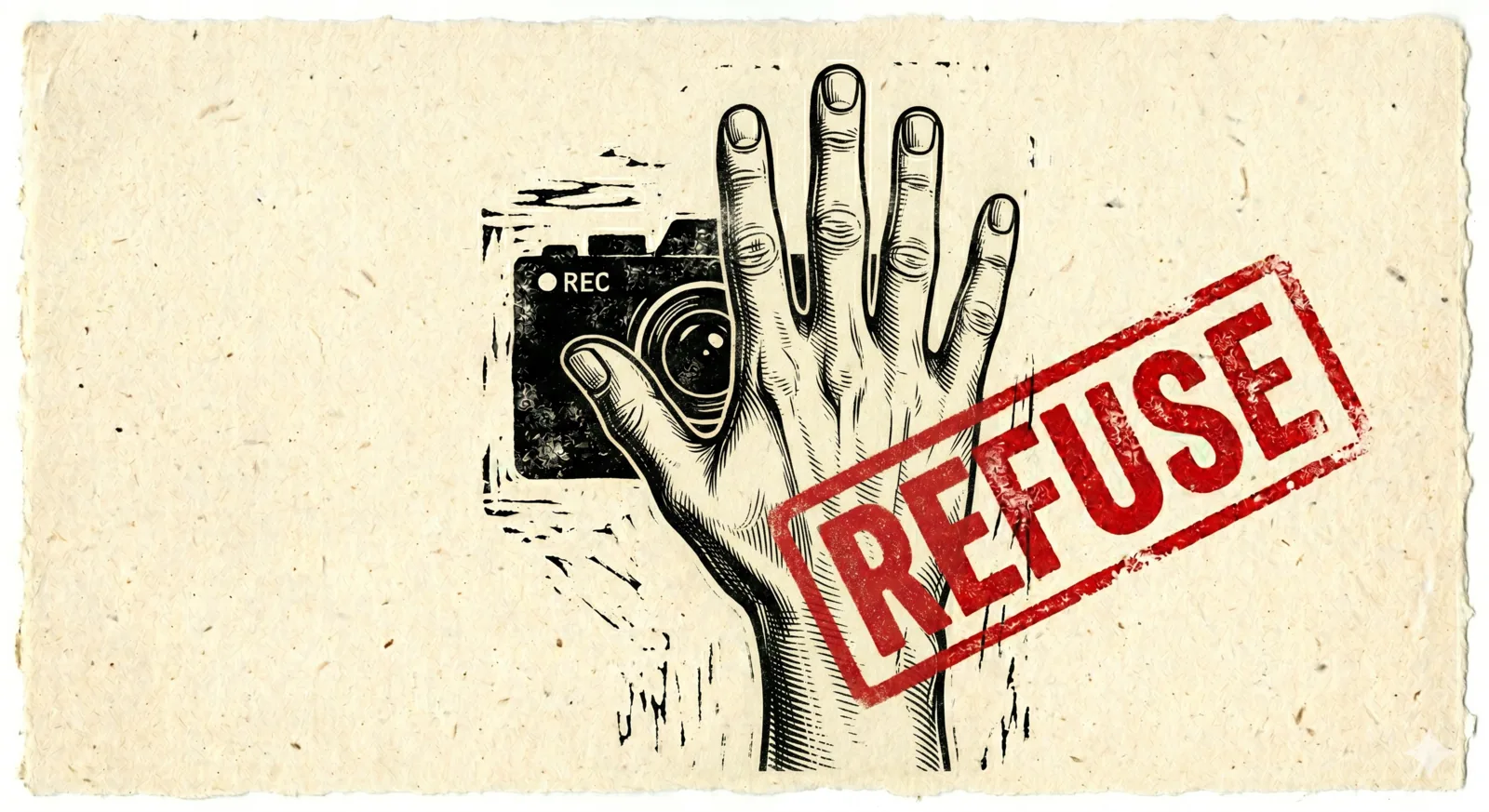
So refuse. Refuse the scan. Refuse the upload. Close the accounts that demand it and tell them, in writing, exactly why you are leaving. The platforms need you far more than you need them. \You can live without the feed, they cannot live without the crowd. Do not comply in advance. The face on your ID is the most permanent thing you own.
Never give them your face.